Our random letter generator picks any letter from A to Z in one tap. It works as a random letter picker, letter randomizer, and random letter wheel, all in one free online tool. If you searched for the best random letter generator, this page shows exactly how it works.
What Is a Random Letter Generator?
A random letter generator is a simple, free tool built to pick a random letter without bias. People also call it an alphabet randomizer, random letter tool, or random alphabet generator, but it always does one job: help you pick a random letter fast.
This letter generator online gives you a single random letter or multiple random letters per round, through a random letter sequence generator built for repeated draws. Get a random letter from A to Z with no signup, instant results, and no download required. As a mobile-friendly generator, it works like other online random tools and generators. This abc picker stays useful for any needs, generating fresh results the moment you tap, like a true randomizer that simply generates what you ask for.
Supported Letters and Alphabets
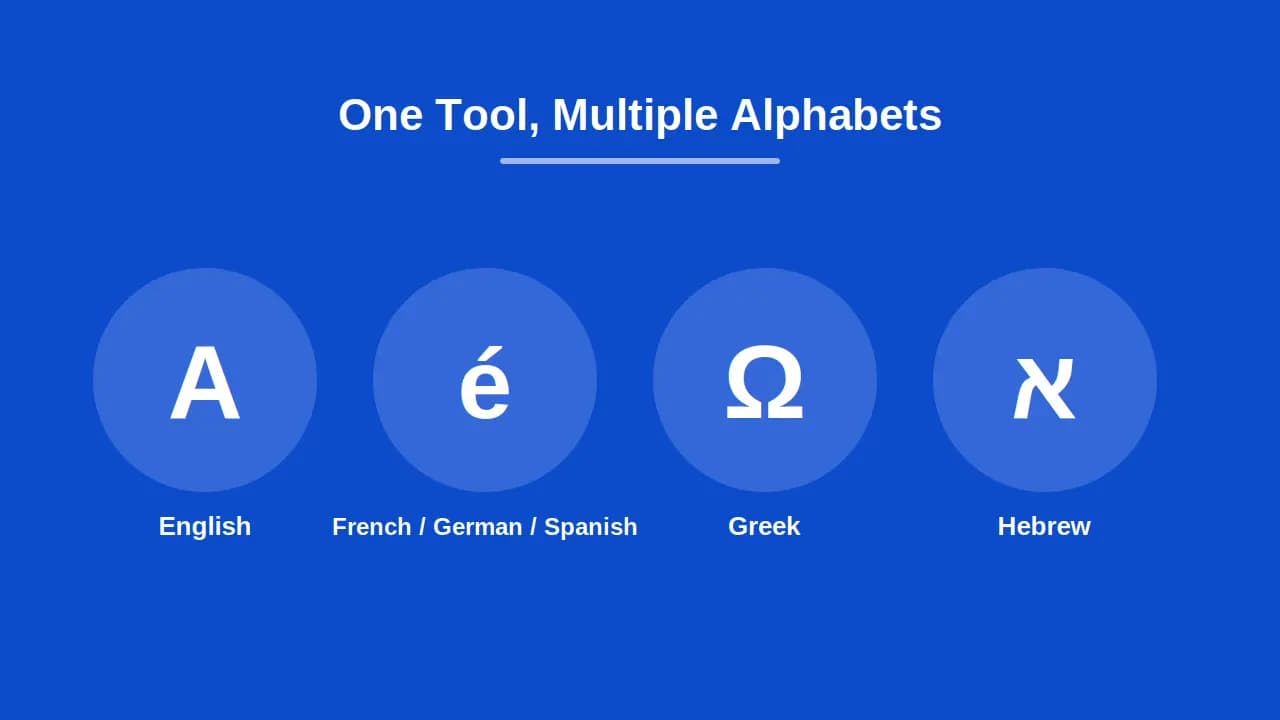
This random letter generator supports several alphabets, not just one. Choose language before you spin, and switch to a different language alphabet anytime. Standard supported generation covers common characters worldwide, all inside one additional randomly letter drop down menu, useful for anyone who wants to study a new script.
English Alphabet (A–Z)
The English alphabet loads as the english default, since most searches want the Latin alphabet first. It holds 26 letters, split into uppercase letters and lowercase letters. Pick capital letters for titles, or lower case for casual text, covering every vowel, consonant, and letter A to Z. Want a specific letter, like A, B, C, or Z? Set the range, and the display shows both upper and lower cases instantly.
French, German and Spanish Letters
French, German, and Spanish letters add extra characters, like accented vowels and umlauts. Each character will correspond to its correct placement inside the alphabet, so a French é or German ü shows up exactly where native speakers expect it.
Hebrew and Greek Letters
Hebrew and Greek letters open the door to non latin alphabet languages inside this generator. These characters follow their own shape and reading rules, yet the tool handles them the same way as any other set for study or practice.
Non-Latin and Other Alphabets
Non-Latin and other alphabets round out the full list of non latin alphabet languages here. Some symbols don't sit on standard computer keyboards, yet the tool displays them without setup, avoiding stray marks like an ampersand or random numbers, since each character will correspond to its right placement.
Is the Random Letter Generator Truly Random?
A random letter generator only works if people trust the result. This tool runs on a pseudorandom number generator (RNG), the method most software uses instead of a true random number generator like the physical source behind random.org. It leans on Math.random and a randomization algorithm, pulling from a random seed that adds entropy so no two sessions repeat.
Fair randomness means unbiased selection: every letter gets equal probability and chance, and statistics show results spread evenly over many spins. Selection stays automated, giving each letter an automated equal chance. Every spin brings a varied, unpredictable outcome, building fairness into the design. The tool draws from a truly random pool, and in unique-in-set mode, a picked letter becomes excluded eligible for the next round. That surprise element stays part of the fun, since even the tool doesn't know the answers beforehand. Turn on letter frequency or weighted randomness to tilt the odds on purpose.
How to Use the Random Letter Generator
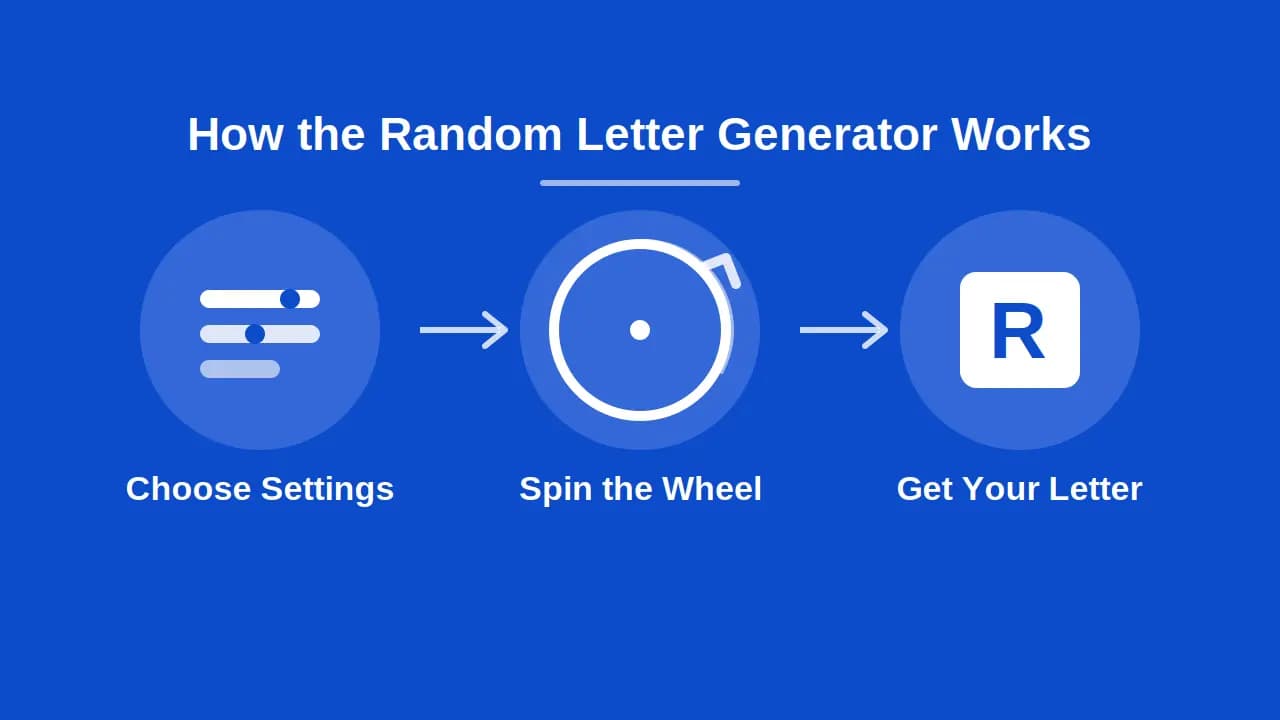
This how-to guide covers how to use the random letter generator from click to result. On a laptop or mobile device, the accessible interface adapts without setup. Press the generate a random letter button for an instant answer, streamlining how to pick a random letter across English mobile devices and desktops, effectively.
Step-by-Step Guide
- Select the number of letters for this round.
- Tap or click the spin press button, also called the pick button, to get the ball rolling.
- Watch the tool select your letter inside a small dialog.
- Your picked letter gets displayed on the main display within a second.
- Hit the reroll button to generate again without losing other choices.
Choosing settings before clicking keeps things simple. For example, set the number of letters to 3, and all three appear together, following the same instructions whether you tap or use keys.
Customized Settings and Preferences
Before you spin, customize the tool settings to match your task. Click expand to configure the generator's behavior. A preferences modal opens with input options, including a custom text input box for your own letters, separated by commas or spaces, giving instant feedback with every setting.
Type Setting
The type setting controls how your letter looks. Pick uppercase for bold results, or lowercase for a softer look, similar to capital lowercase like formatting. Keep letters capitalized, or leave the style original and unchanged. It even supports a generate cursive process for handwriting sheets, while uppercase educational spelling suits beginner readers in upper case or lower case.
Wheel Style
Wheel customization changes how the letter picker wheel looks while it spins on a colored canvas. An animation spinner spins smoothly, and you can pick a generated gear theme with small chips, or educational-friendly fonts for classrooms. Colors stay mixed and alternating, or steady, from vibrant to soft pastel tones, down to minimal grey or white.
Unique in Set
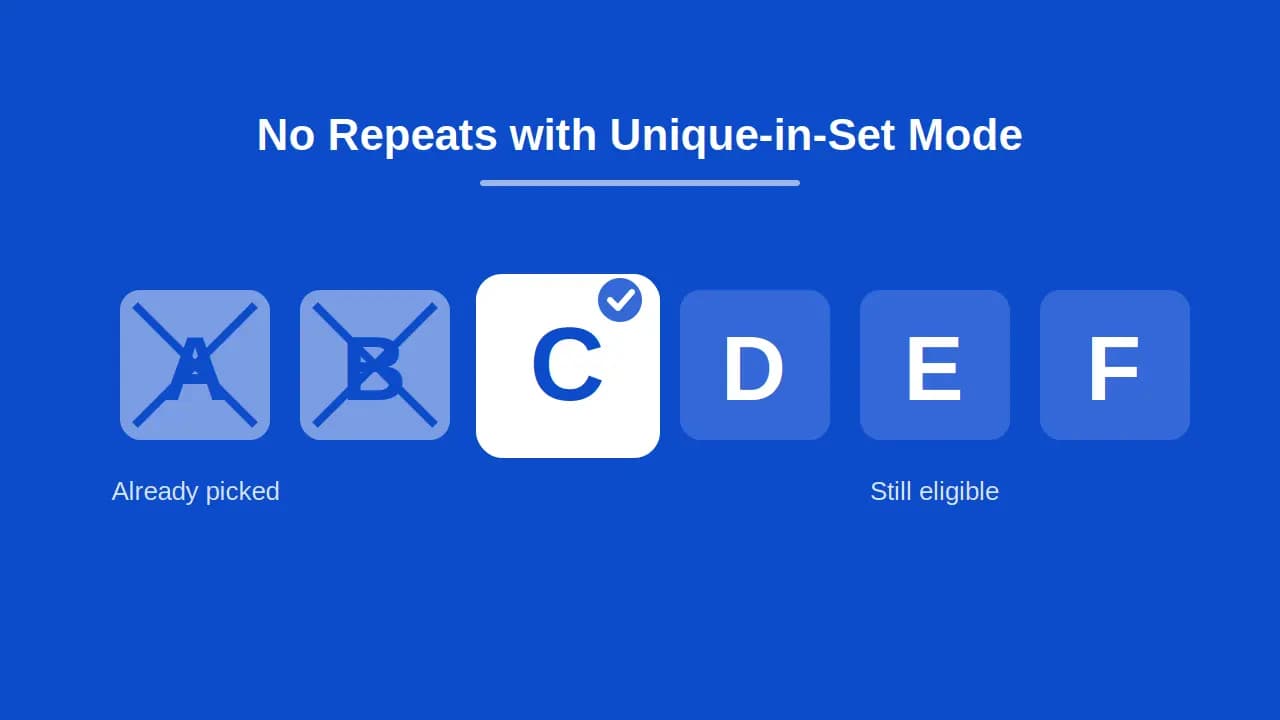
Turn on unique in set mode for unique letters only, with no repeat letters in the same round. The tool will shuffle, shuffle again, then sort results so each pick stays fresh, moving picked letters to the excluded eligible list.
Exclude Letters
Exclude letters turns this into a random letter generator with filters. Set a custom letter range, or mark a first range to skip, running it as a vowel only generator or consonant only generator. Filter by case, vowels, or consonants; each exclusion shows as a status pill marking your active condition, blocking unwanted letters from your sets. You can turn off the exclude confetti effect too.
Enable Mystery Mode
Mystery mode swaps your view for a mystery result that stays hidden until ready. It replaces normal inputs with a question mark, adding more mystery to each spin. Your letter sits temporarily hidden until you tap reveal, then it shows or gets announced aloud. Enable speak to trigger text-to-speech, with voices reading at slow, normal, or fast speed, fully adjustable. This speak reads feature adds surprise to any group.
Wheel Customization
This panel lets you customize and configure spin mechanics beyond looks. Open tool settings to adjust spinning speed, duration, or set a manual stop count, plus the initial angle before each spin.
Toggle confetti and sound on or off, or disable for a quiet setting. Enable sounds and pick ending colors and themes for when a letter locks in. Premium users get a custom background color, image, banner, or logo. Everything sits inside one control bar, avoiding a mixed settings dialogue. Turn off celebratory effects for a clear spin, or adjust and hit animation save to keep your setup.
Modes
This tool offers a few modes for different games. Type normal mode for a simple, repeatable draw, or switch for group play, changing how the available spin count works.
Normal Mode
Normal mode keeps things simple. Every available spin picks fresh from the full alphabet. Flip the continue toggle on to keep spinning automatically after each result.
Elimination Mode
Elimination mode works as an elimination generator, removing each selected letter before the next use, great for a kid-friendly game night. Check the history section to track what's gone, as the continue toggle keeps inputs shifted toward the center for the next spin.
Enable Title Section
Use title insert to add a title and description above your results, explaining the result aim for a particular activity. Open the panel, type your text, then close it. Modify the texts anytime, and save multiple titles for later rounds.
View All Results
Click view all results to see every letter drawn in one place. The tool will show results top-right in a summary box, with full history. Toggle the switch for accumulated scores, and follow the accumulated link to open the full page.
Hit clear records to wipe old data. An arrow in the corner cycles through past results, and clicking it starts a restart sequence. Look to the left corner for the most recently announced letter, replacing the new previous one, each result clearly identified and tracked in a recent, clean list.
Share Results
Once you finish, share results with one tap. Click the share single icon to send your letter to friends, or download it as an image. Use copy to clipboard to paste it into a message. Save the full letter history log inside an app, or bookmark it as a collect participant sharing method.
Night Mode and Full Screen View
Switch to night mode in low-light environments, and the screen shifts to a dark, top deep navy tone. Tap the moon icon to enter night fullscreen, or exit anytime. Full screen view makes the letter appear enlarged, useful for an expand projection setup. Click the double-arrow expands button to trigger this instantly, alongside advanced accessibility features for larger text.
Common Use Cases for Random Letters
Random letters serve many use cases beyond games. This generator sits among related tools like a random word generator, random number generator, random name generator, or random name picker, plus a dice roller, coin flip generator, random color generator, and random sentence generator.
The key uses below cover games, classrooms, writing, and work, each built on the same technical feature: a fast pick from A to Z. Some use it as a decision making tool, others as a brainstorming tool, or just check the random letter of the day.
Games and Entertainment
Spin the wheel letters for instant entertainment. This alphabet wheel spinner fits word games, working as a Scrabble tile generator, Wordle helper, or partner for Hangman word game rounds. Hosts use it as an icebreaker game, trivia nights as a quiz and trivia game tool, and puzzle fans as a puzzle maker, pulling a random letter for games with a twist. The spinning motion feels engaging, and the surprise keeps players hooked, some running it like roulette during competitions.
Education and Classroom Use
ABC learning for kids gets easier with alphabet flashcards and this classroom activity generator. Teachers use it as a teaching tool for teachers, offering fresh kids learning games without prep, fitting among homeschool resources and ESL classroom tools.
Teachers teach faster when the tool handles the random part, freeing time for children and students. Classroom activity runs smoother across classrooms and homeschools, helping identify child progress, boost participation, and build simple, basic understanding of the alphabet.
Phonics and Language Learning
Spelling bee practice improves when students draw a fresh letter each round. Learning English gets easier with a second letters the option, pairing two letters to lower test knowledge gaps. Phonics lessons build a phonics picked word straight from the draw, expanding vocab.
Ask a student to read out the letter, then increase vocabulary by naming a word that starts with it, a quick test for kids who begin learning to read, from easy a words to more difficult ones. End word games use the last letter instead, helping students learn to read quicker, master sounds, and build pronunciation through practice.
Creative Writing and Brainstorming
This tool doubles as a writing prompt generator for a story starter letter. Use it as a character naming tool, since a random name often sparks a whole plot. Writing creativity grows when you challenge yourself to use each generated letter, and many writers build stories around one letter.
Enhance a session by starting every sentence with the same letter, creating an interesting story from a few generated ideas, incorporating the letter into names, since even visual creators use this trick.
Professional and Technical Use
This tool doubles as a basic password character generator or supports cryptography key generation exercises. Developers use it while testing a programming random character function, or as a coding test data generator during early projects.
Professional teams use it in professional training sessions for skill-building, or quick party coding steps during breaks. Adults enjoy it during team-building sessions and meetings, useful for numbering exercises and meeting teaching interactive randomization. It also works as a name starting letter generator or initial letter generator.
Decision Making
A decision making tool removes personal bias. Try it as a secret santa letter draw, replacing paper slips with digital drawing lots, or a lucky letter draw during game night.
For everyday decision-making, letting the tool choose keeps things completely random. Write down a list of things, then let the starting specific letter determine your answer. Groups use this for decision-making tasks at work too, since unbiased decisions build trust, and whatever gets chosen feels fair.
Fun Ways to Use the Alphabet Letter Generator
This fun selector isn't just for grown-ups. Kids, families, and classrooms find quick activities from one letter. Below are five ideas turning random letters into learning.
Alphabet Bingo or Matching Games
Alphabet bingo turns this generator into a bingo letter caller for classroom or family fun. Print real cards, then run matching games by drawing one letter at a time, as players scan matching squares and shout when they find a match.
Call out mark each letter during quick-fire rounds, so kids hear it, match their card, and mark the square. This bingo review style helps reinforce letter recognition, with small items as prizes.
Alphabet Scavenger Hunt
An alphabet scavenger hunt gets kids moving. Start the search around the house, and have each child find an object starting with the shown letter, with small groups taking a turn to complete their list first.
Look at what surrounds you: a table, tennis ball, or toothbrush for teeth. Add counting through simple math exercises, tallying objects each group collects. This hunt builds letter recognition in a playful way, ranking among the younger easiest games for preschoolers learning to recognize letters, with a book, banana, or stuffed animal as good matches.
Word Brainstorm Race
A word brainstorm race turns one letter into a minute of fast thinking. Set a timer, draw a letter, and ask players to think of as many words as possible, with a chosen follow-up round raising stakes with longer words.
This suits learners of every age, since younger players stick with common words while older players stretch for unusual examples, keeping this active, connecting, real-world brainstorm race lively. Try naming animals or foods for a themed twist.
Drawing Challenge
A drawing challenge combines art and letters. Draw a letter, then ask players to draw a picture starting with it, whether a cat, a castle, or anything else that fits.
This quick sketch works solo or in groups, turning into a full art project once players add color and detail, so no two drawing sessions look the same.
Story Starter
Use this as a story starter when a blank page feels quiet. Draw a letter, then build a sentence beginning with a word that starts with it, as each student adds one sentence and a short story begins.
This group adding, collaborative style keeps everyone involved. Pick a simple type of story if the group feels stuck for an idea, and let a different voice read announcements between turns.
Pair the Letter Generator with These Alphabet Activities
Pair this generator with an alphabet soup game, flashcards, or classroom songs. Practicing letters feels less like work during the early elementary years, especially swapping a plain spinner or physical dice for this faster version, moving whole group activities along quicker.
Add tracing after each spin, or print printables and printable worksheets ahead of time. Coloring pages and creative sheets pair well, and handprint crafts built around the letter make a nice keepsake. These touches spark literacy skills, and older students can turn the setup into spelling challenges.
Families running homeschooling say this setup saves time on lessons, since spontaneous, no-prep activities come together instantly. Quick teachers and busy parents like the warm-up centers this creates, turning idle minutes into purposeful, no-prep breaks. Preschool classrooms benefit most, using settings like no repeats, vowels only, or a consonants reset button.
Practicing playful ways to learn keeps family and classroom settings light. Specialized parenting resources recommend this kind of teaching, since it lets kids play while learning, staying familiar for one home or a full homeschool group. This random letter generator makes alphabet practice easy and fun for every age.
Frequently Asked Questions
What is a letter roulette?
Letter roulette is just a fun spin on our random letter generator. It picks a random letter the same way a roulette wheel picks a number. You spin, wait a second, and land on any letter from A to Z. Some folks use it for games, others for quick decisions. It's random, it's fair, and it feels exciting every single time. No skill needed, just click and let the wheel do the work for you.
How many letters are in the alphabet?
The English alphabet has 26 letters, from A all the way to Z. Our random letter generator uses all 26 by default, so every letter gets an equal shot. You won't find extra symbols or numbers mixed in, unless you switch to another alphabet inside settings. It's the same set you learned as a kid, just randomized fresh with each new spin on our tool.
What was the 27th letter of the alphabet?
There isn't an official 27th letter in modern English, since the alphabet stops at 26 with Z. Long ago, the ampersand (&) sometimes got treated as a 27th letter in old spelling books. Our random letter generator sticks to the standard 26 letters only, keeping results clean and familiar for everyday use, games, and learning without confusing extra symbols.
What are letter numbers?
Letter numbers just mean each letter's position in the alphabet, so A is 1, B is 2, and Z is 26. Our random letter generator doesn't show these numbers by default, but you can match them yourself. It's a handy trick for puzzles, codes, or quick math games where kids connect letters to numbers while learning the alphabet in a new way.
Does this generator only produce random English letters?
No, it's not limited to English only. Our random letter generator supports other alphabets too, including French, German, Spanish, Hebrew, and Greek letters. You can even pick non-Latin alphabets from a simple drop-down menu. English loads as the default option, but switching languages takes just one click, making this tool useful for learners studying different scripts.
Is this tool a free A to Z random letter generator?
Yes, it's completely free to use, no signup or payment needed. You get a full A to Z random letter generator right in your browser, with instant results every time you spin. There's no download required either, so it works the moment you open the page, whether you're on a laptop, tablet, or phone.
Can you generate a random letter from A to Z?
Absolutely, that's the whole point of this tool. Just hit the button, and you'll get a random letter from A to Z in a split second. You can generate one letter or several at once, depending on your settings. It's quick, fair, and works the same way every single time you use it.
Can I generate more than one random letter at a time?
Yes, you can pick how many letters you want before spinning. Set the number, then generate multiple random letters in one go instead of one at a time. This works great for games needing several letters at once, like word challenges or group activities where everyone needs their own random pick.
Does it include both uppercase and lowercase letters?
Yes, our random letter generator supports both uppercase and lowercase letters. You can choose capital letters for bold results or lowercase for a softer style. Switching between them takes one click inside the type setting. This flexibility works well for teaching kids letter cases or formatting text exactly how you need it.
Can I choose only vowels or consonants?
Yes, you can filter results to show only vowels or only consonants. This turns the tool into a vowel only generator or consonant only generator, depending on what you're practicing. It's a great option for phonics practice, spelling games, or classroom drills focused on specific letter sounds and patterns.
How can I use a random letter generator?
Using it is simple. Pick your settings, like letter case or exclusions, then click the generate button. Your random letter shows up instantly on screen. Reroll anytime for a fresh pick. Whether you're playing a game, teaching a lesson, or just curious, the whole process takes only a few seconds.
Does the tool work on mobile devices?
Yes, this random letter generator works smoothly on mobile devices, tablets, and laptops. The interface adjusts automatically to fit smaller screens, so tapping the generate button feels just as easy on a phone as it does on a computer. No app or download needed, just open your browser and start spinning.
Can I hear the generated letter spoken aloud?
Yes, you can enable speak mode to hear each letter read aloud. This text-to-speech feature works great for phonics practice or younger kids still learning letter sounds. You can even adjust the voice speed between slow, normal, and fast, depending on what fits your lesson or activity best.
What does the 'Type' setting do?
The type setting controls how your letter appears once generated. Choose uppercase, lowercase, or keep the style unchanged from the original format. There's even a cursive style option for handwriting practice. This small setting makes a big difference for teachers building spelling or writing exercises around specific letter cases.
What is the Wheel style?
Wheel style changes how the spinning wheel looks during each round. You can pick different colors, themes, or fonts, from vibrant to soft pastel tones. It's purely visual, so it doesn't change how letters get picked. Think of it as customizing the look while the randomness underneath stays exactly the same.
What does 'Unique in set' mean?
Unique in set means no letter repeats until every letter gets picked once. Once a letter shows up, it's removed from the next round automatically. This setting works great for games needing fair turns, like classroom activities or group challenges where repeating the same letter would feel unfair or boring.
What does 'Exclude Letters' do?
Exclude letters lets you remove specific letters before spinning. Maybe you want to skip tricky letters like Q or X for a kids' game. Just type in the letters to block, and the generator skips them completely. It's a simple way to control results without changing anything else in your setup.
Why is the Wheel option greyed out?
The wheel option usually greys out when a required setting hasn't been selected yet, like choosing a language or letter range first. Once you fill in the missing setting, the wheel becomes active again. It's just a small check built into the tool to avoid errors during setup.
Can I use this as a classroom letter spinner?
Yes, teachers use this as a classroom letter spinner all the time. It works great for calling on students, starting spelling drills, or picking letters for group activities. The visual spin keeps kids engaged, while the randomness keeps things fair for every student during lessons or quick classroom games.
How can I use the alphabet randomizer with kids?
Kids love using this alphabet randomizer for simple games like scavenger hunts or bingo. Spin the wheel, then ask kids to find or name something starting with that letter. It builds letter recognition naturally, keeps them engaged, and works well for both classroom settings and casual family playtime at home.
Can a random alphabet generator help with language learning?
Yes, it works well for language learning practice. Use it for spelling drills, vocabulary building, or phonics exercises by picking a letter and naming a word that starts with it. Switching alphabets also helps learners studying new scripts, making this tool flexible for different language learning goals and skill levels.
Why is a random alphabet generator useful for homeschooling or teaching?
It saves time during lesson planning since there's no prep needed beforehand. Homeschool parents and teachers use it for spontaneous letter games, spelling practice, or warm-up activities. The randomness keeps lessons fresh and unpredictable, which helps hold kids' attention better than repeating the same letters or worksheets every day.